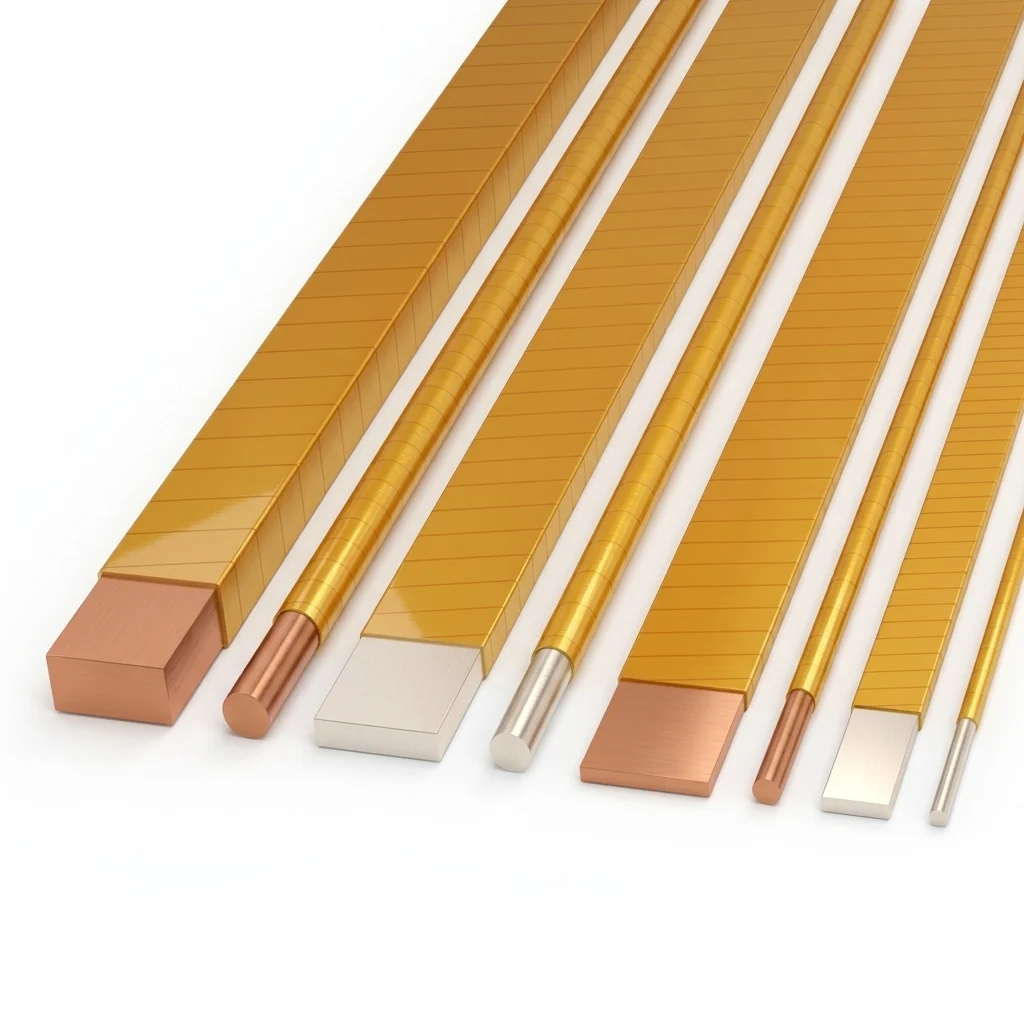
Polyimide Film (Kapton®) Insulated Wires
Rectangular and round copper wires wrapped with polyimide film for the highest thermal classes (220–240).
In film-insulated conductors the insulation is not applied in liquid form like enamel; a thin polymer film or glass-fibre tape is wound helically onto the conductor at a defined overlap. This method comes into play where enamel coating is thermally or mechanically insufficient: polyimide film allows continuous operation up to class 240, while a glass-fibre wrap prevents the insulation from being stripped under high mechanical stress.
The films used comply with the requirements for electrical-purpose plastic film under IEC 60674. In composite structures combining Kapton and glass fibre, the film provides dielectric strength and the glass fibre takes on abrasion and impact resistance; this combination is preferred in heavy service such as wind turbine generators and traction motors.
Polyimide Film (Kapton®) Insulated Wires Products
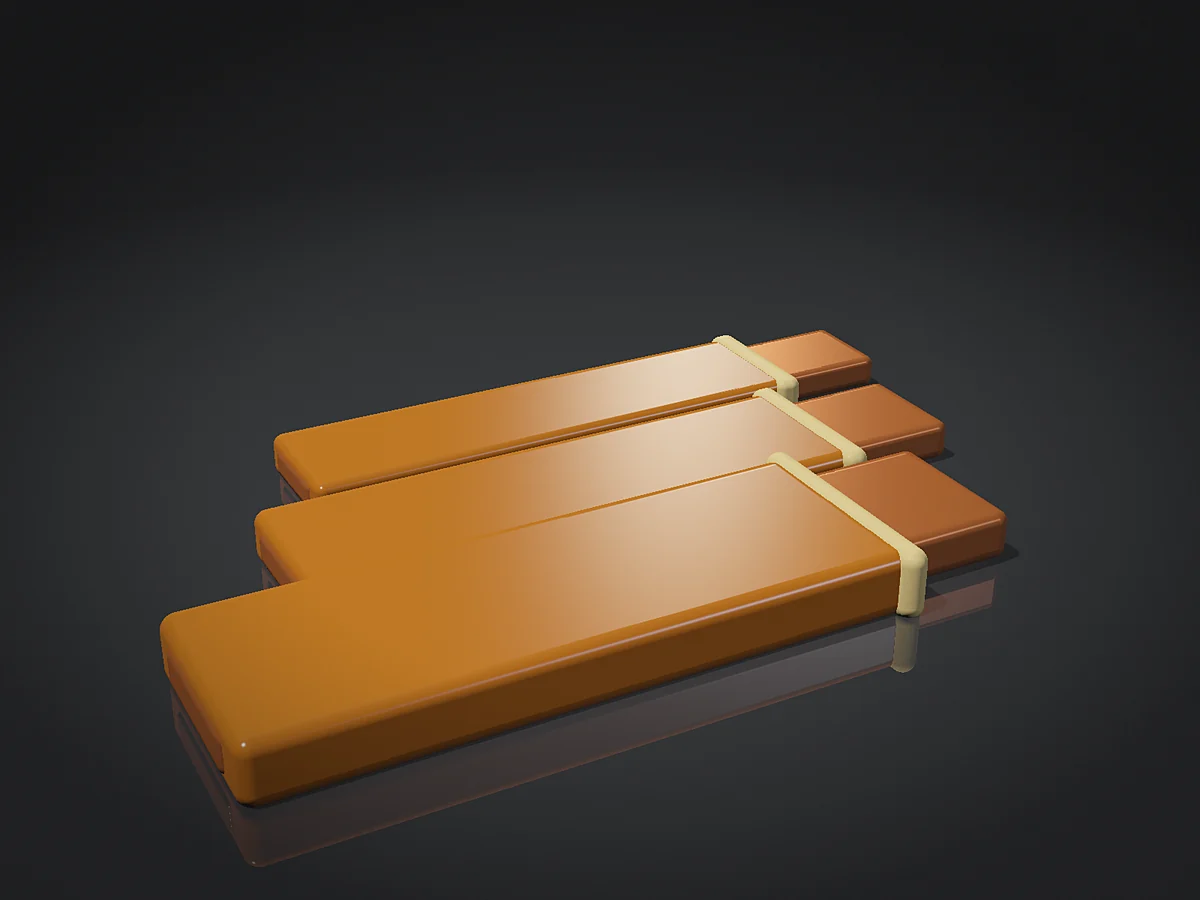
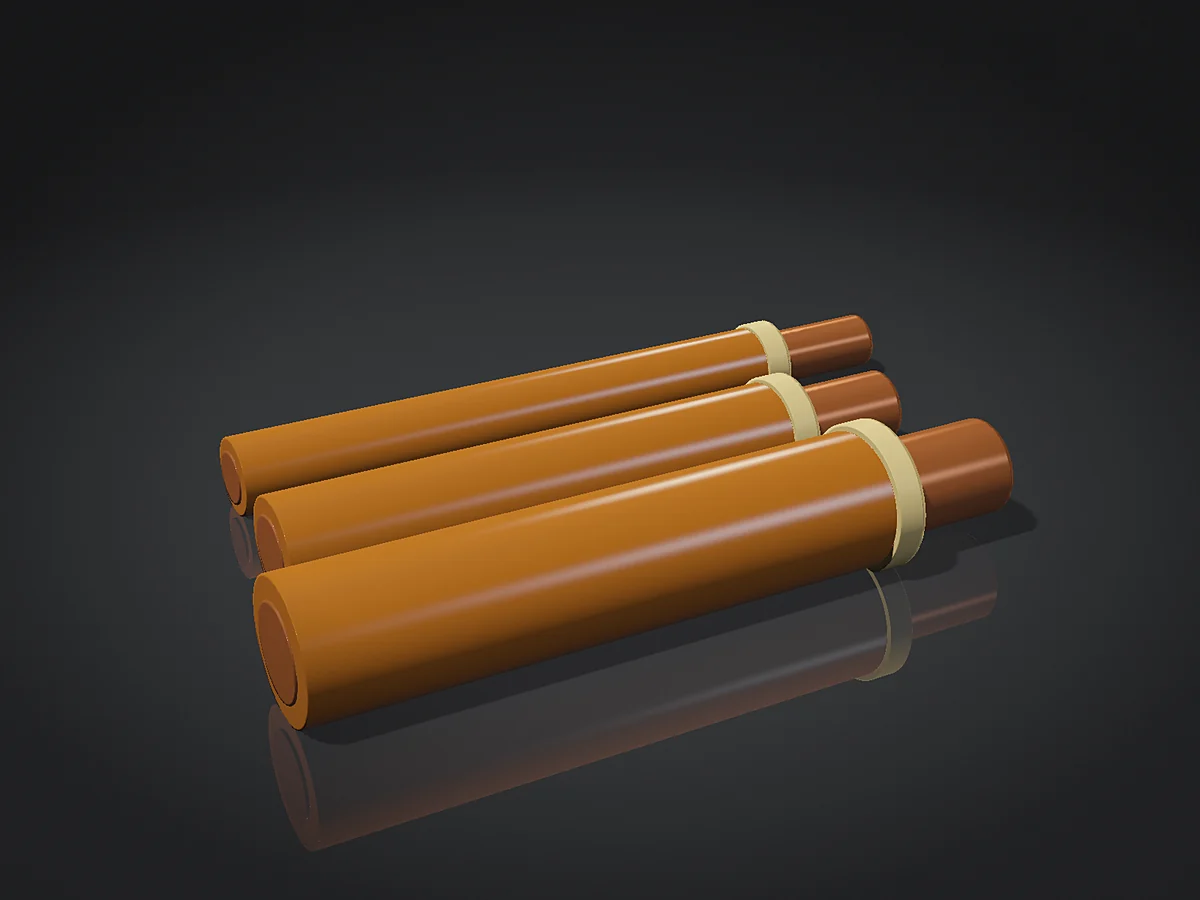
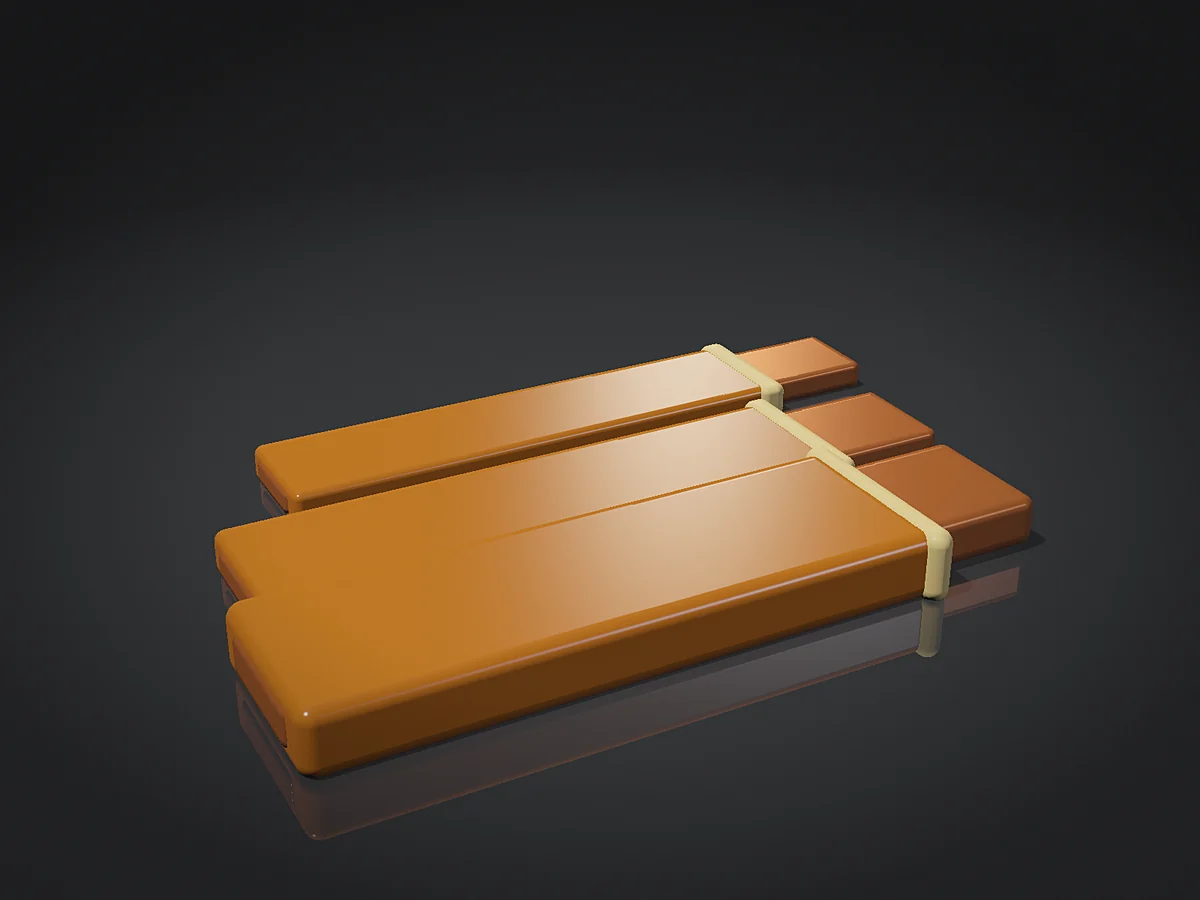
Technical Information
- Film type: polyimide (Kapton), polyester (Mylar), glass-fibre wrap, daglas silk braid
- Thermal class: 130 (B) – 240 (C), depending on structure
- Overlap ratio: 25% / 50% (half-overlap) / 66%
- Reference: IEC 60674 (plastic films), IEC 60317 (conductor dimensions), IEC 60851 (test)
- Impregnating varnish or an additional glass-fibre layer over the film on request
Polyimide film is one of the insulation materials offering the highest dielectric strength per unit thickness and preserves its properties over a wide temperature range. Polyester-mylar film, in turn, is an economical and dimensionally stable alternative for applications up to Class 130; its low tendency to take up moisture is an advantage in enclosed-environment windings.
The overlap ratio directly determines the insulation performance. Half-overlap guarantees at least two layers of film at every point of the conductor; low overlap ratios limit the build increase but can leave voids that carry a breakdown risk.